
Chandigarh, November 5, 2026: The Haryana Cabinet has approved a new Land Pooling Policy-2026, offering participating landowners 50% of the saleable area in developed projects while the remaining half will be retained by the development agency. The decision, reported following the Cabinet meeting chaired by Chief Minister Nayab Singh Saini on November 3, replaces the state’s 2022 land-pooling framework and could affect how future planned urban projects are assembled.
The approval is a policy decision, not the launch or completion of a specific housing project. Landowners and buyers should wait for project-specific notifications, eligibility details and approved layouts before assuming that any particular parcel will be developed or transferred.
What Haryana’s Land Pooling Policy-2026 changes
Under the newly approved approach, participating landowners are to receive developed plots representing 50% of the total saleable area specified in an approved layout plan. The development organisation retains the other 50%. This differs from the previous policy, which linked a landowner’s entitlement to the market value of the land.
Reports in The Indian Express, Hindustan Times and The Times of India describe the new 50:50 division. The phrase saleable area is important: it should not be read as a promise that a landowner receives half of the original agricultural acreage as an immediately marketable plot.
Interim payments for participating landowners
According to the reporting, the policy provides interim financial support of ₹1 lakh per acre per year for four years, proportionate to the land contributed, starting from registration of the sale deed. This is intended to help bridge the period between land contribution and delivery of developed plots. Actual entitlement will depend on the applicable policy terms and project documents.
Hindustan Times also reported that the project-completion period has been reduced to four years. A stated policy timeline is a target, not evidence that future developments will necessarily finish on schedule.
Why this matters to Panchkula and the Chandigarh region
Haryana’s development policies are relevant to the broader Chandigarh Tricity property market, especially Panchkula and other Haryana-administered growth areas. Planned land assembly can potentially support roads, utilities, residential layouts and other infrastructure while offering a defined mechanism for landowner participation.
But the Cabinet approval does not establish that any new Panchkula township has been sanctioned under this policy. Nor does it provide a verified forecast for local property prices, jobs or investment. Those outcomes would require separately announced projects, funding, approvals and implementation.
How the 2026 framework differs from the 2022 approach
The reported shift from market-value-linked allocation to a fixed share of saleable developed land makes the basic formula easier to explain, although the eventual value of a landowner’s share will still depend on location, infrastructure, layout and market demand. The development agency’s retained share is intended to support the development model, but project economics and costs will vary.
The policy is also presented as a measure to promote planned urbanisation and discourage unauthorised plotting. Whether it achieves that aim will depend on transparent project selection, infrastructure delivery, landowner consent where applicable, and enforcement of planning rules.
What landowners, developers and buyers should verify
Before acting on the announcement, stakeholders should check the formally notified policy text, the competent development authority, the land and village boundaries covered by any proposed scheme, and the approved layout. They should also review how saleable area is calculated, when interim support becomes payable, and the process for allotting developed plots.
For buyers, a Cabinet-level policy approval is not a substitute for title due diligence, statutory permissions, project registration where required, and verification of any developer’s marketing claims. Land pooling can provide a framework for future development, but it is not itself proof that a specific real estate investment is approved or risk-free.
Sources and reporting note
- The Indian Express, November 3, 2026
- Hindustan Times, November 4, 2026
- The Times of India, November 4, 2026
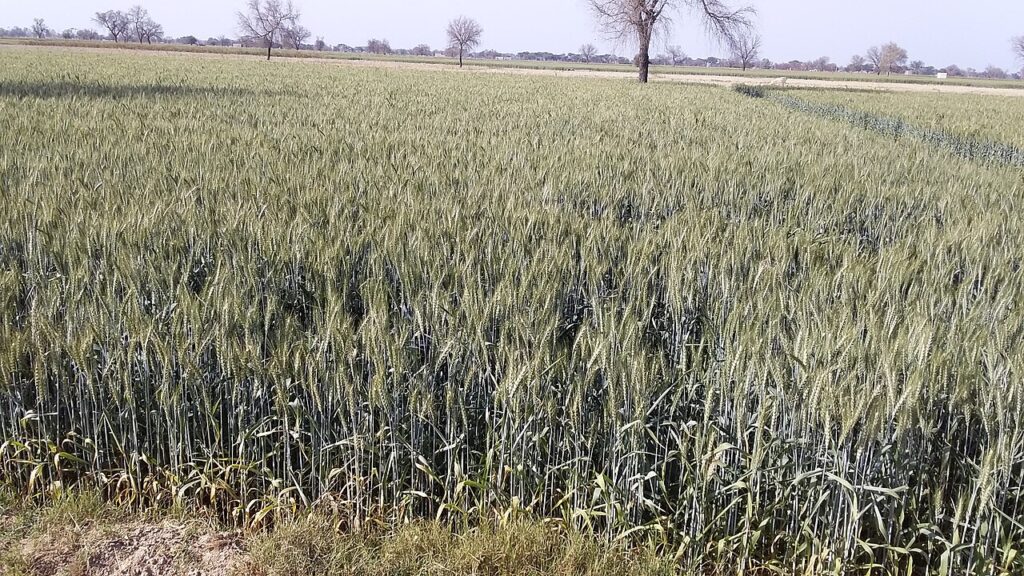
Editorial note: This report covers the Cabinet approval as reported by independent news organisations. The final gazetted policy document and project-specific notifications were not independently obtained for this article. Featured image: illustrative Haryana wheat fields, photographed by Aman Rania, Wikimedia Commons, CC0 1.0. The photograph does not show a notified land-pooling site.
