
Chandigarh, November 5, 2026: Punjab’s government-backed startup funding programme has announced a fresh round of support, with Industries and Commerce Minister Aman Arora distributing ₹1.17 crore in seed grants to 28 startups during the second Punjab Investor Circle event held on Wednesday, November 4. The event also brought founders and prospective investors together, highlighting the state’s effort to make early-stage capital and business support more accessible.
The grant distribution and event details were reported by The Tribune on November 5 and described in a detailed November 4 account of the minister’s announcement. The reported funding is a government seed-grant disbursement, not evidence that the participating businesses secured private investment or created a particular number of jobs.
What happened at Punjab Investor Circle 2.0?
The second edition of Punjab Investor Circle followed the programme’s launch in July 2026 at the Institute of Nano Science and Technology (INST), Mohali. Officials describe it as a forum for connecting startup founders with investors, industry executives and financial institutions.
At the November 4 event in Chandigarh, the state announced the distribution of ₹1.17 crore among 28 startups. Ten startups also presented technology and business ideas to investors. The showcased sectors included artificial intelligence, robotics, biotechnology, health technology, advanced materials, sustainable technology, smart manufacturing and agricultural innovation, according to the event account.
The pitching session is an opportunity to meet potential backers, not a confirmed venture-capital fundraising round. No independently verified investment commitments resulting from those presentations were established in the reports reviewed.
Seed grants, startup policy and digital tools
The minister said Punjab’s Startup Policy 2026 provides for seed grants of up to ₹15 lakh in two instalments for eligible ventures, alongside certain interest, lease-rental and government-procurement incentives. These are policy provisions subject to eligibility and programme rules, rather than automatic entitlements for every new company.
Another development announced at the event was a memorandum of understanding between Startup Punjab and Zoho under the Zoho for Startups programme. Officials said eligible registered startups would be able to access up to ₹1.86 lakh in Zoho wallet credits for qualifying digital business services. The value refers to software-service credits, not cash grants or equity investment. The practical terms, qualifying services and redemption conditions should be checked with the programme administrators.
Why Mohali’s startup ecosystem is relevant
The programme’s first edition was held at INST Mohali, and the state’s wider incubation network includes institutions in and around the Chandigarh region. Officials identified academic and innovation links involving IISER Mohali, ISB Mohali, Plaksha University and IIT Ropar, among others.
For entrepreneurs in Mohali, Chandigarh, Kharar and Zirakpur, the most direct potential benefits are access to mentorship, investor introductions, research partnerships and early-stage financial assistance. Whether these opportunities translate into business growth, local hiring or commercial orders will depend on individual ventures’ progress.
The reported November grant recipients were not individually identified in the sources reviewed. Accordingly, it would be premature to claim that a specific number of the 28 funded startups are based in Mohali or Chandigarh.
Understanding the government’s startup numbers
Arora said the state’s startup count had risen from 36 in 2021–22 to 404 in 2026 and that ₹6.8 crore had been distributed to 222 startups through the seed-funding programme. These are figures attributed to the minister, not an independently audited count of all businesses operating in Punjab.
There is an important distinction between figures for a state-supported programme and the much broader number of startups recognised under the central government’s DPIIT framework. Earlier reporting on the July launch cited more than 2,500 DPIIT-recognised startups in Punjab. The two counts should not be directly compared without matching definitions, reporting dates and eligibility criteria.
Officials also said women directors lead or are associated with a substantial share of startups. The precise measurement method was not independently established for this report, so no conclusion about women-owned businesses is drawn from that claim.
What comes next for Punjab’s entrepreneurs?
The most useful follow-up indicators will be the official list of funded startups, the size of individual grants, programme eligibility documentation, the status of any subsequent investment agreements, and measurable commercial outcomes such as product launches or jobs. These would help readers distinguish public funding announcements from longer-term business results.
The November 4 disbursement is a concrete funding development. The wider claims about future innovation, investment and employment remain objectives rather than confirmed outcomes.
Sources and image credit
- The Tribune, November 5, 2026: 28 startups receive ₹1.17 crore seed funding
- Jagrati Lahar, November 4, 2026: Detailed account of Punjab Investor Circle 2.0 announcement
- The Times of India, July 9, 2026: Background on the original Mohali launch
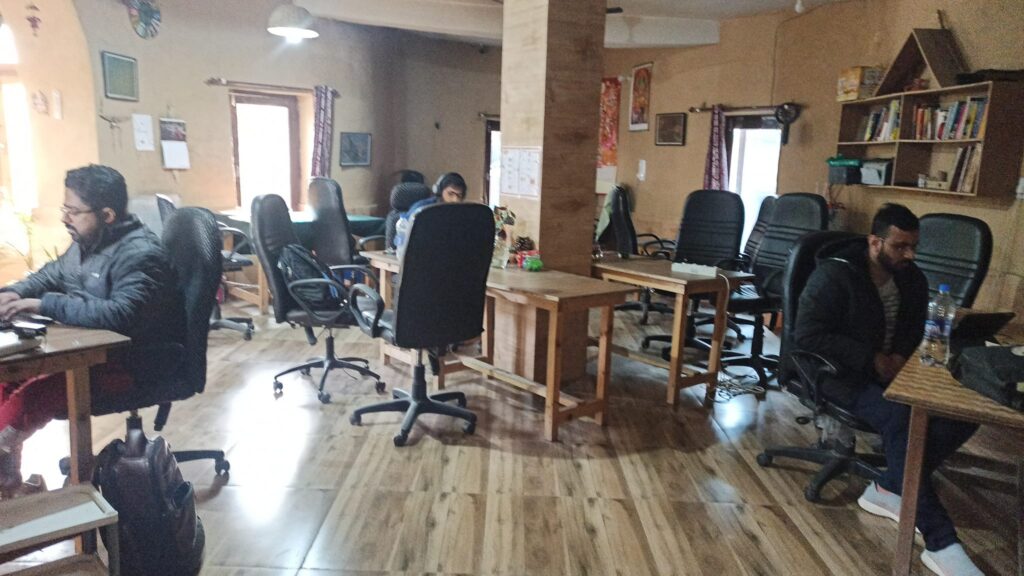
Featured image is illustrative and does not depict the November 4 event. Photograph by Workspace India, via Wikimedia Commons, licensed under CC BY-SA 4.0. No modifications are claimed.
