
Chandigarh | November 6, 2026: The Supreme Court has approved a 20-year arrangement to settle long-standing electricity dues involving Punjab, Haryana and Himachal Pradesh under the Bhakra Beas Management Board (BBMB) hydroelectric projects. Under the arrangement reported on Friday, Punjab and Haryana will provide Himachal Pradesh a combined 11,973 million units (MU) of electricity over two decades, rather than settling the historical liability through a cash payment.
The decision is significant for the northern region’s electricity governance and public finances. It offers a defined framework for an interstate dispute stretching back to the 1966 reorganisation of Punjab, but does not itself establish any immediate change to household electricity tariffs or supply schedules in Chandigarh, Mohali or Panchkula.
Details were reported on November 6 by PTI via The Tribune, The New Indian Express and Aaj Tak’s legal desk. This report describes the court decision as reported by these outlets; the complete signed November order was not independently available for review at publication time.
What did the Supreme Court decide?
A bench comprising Chief Justice Surya Kant and Justices Joymalya Bagchi and V. Mohana accepted a Centre-backed proposal to discharge the historical power entitlement through electricity deliveries. The total reported settlement quantity is 11,973 MU over 20 years. One million unit is one million kilowatt-hours, so the total represents 11.973 billion kilowatt-hours across the entire settlement period.
The total is a combined obligation of Punjab and Haryana, not a separate 11,973 MU requirement for each state. The reports reviewed do not provide a definitive state-by-state annual delivery schedule, and the aggregate should not be interpreted as an equal annual instalment without the implementation documents.
How the dispute developed from the 1966 reorganisation
The dispute concerns historical power entitlements associated with the Bhakra Nangal, Dehar and Pong hydroelectric projects. The Supreme Court’s 2011 decision recognised Himachal Pradesh’s entitlement to a 7.19% share under the relevant allocation arrangement, with historical dates of entitlement tied to different projects.
According to the November 6 reporting, the Central Electricity Authority originally calculated an entitlement of 13,066 MU. The accepted settlement instead provides for 11,973 MU after the agreed treatment of historical project costs. The court’s decision is therefore about the settlement of accumulated entitlements, rather than the announcement of a new dam or an increase in electricity generation capacity.
Why a 20-year settlement was chosen
States had disagreed over the period in which arrears should be cleared. The reports say Himachal Pradesh sought a 10-year schedule; the Centre had proposed 15 years; Punjab subsequently sought 30 years. The court-approved compromise spans 20 years.
Reporting also describes a ₹420-crore adjustment related to historical capital expenditure on the dam projects. That adjustment is part of the calculation underpinning the settlement, not a newly announced ₹420-crore payment to Himachal Pradesh. Under the accepted proposal, Himachal Pradesh is not required to pay Punjab or Haryana a corresponding cash amount.
What it means for Chandigarh, Mohali and Panchkula
Chandigarh’s regional energy interests are linked to BBMB allocations, while Punjab and Haryana administer extensive power distribution networks serving neighbouring Tricity districts. PTI’s account of the earlier allocation records Chandigarh’s share at 3.50%, alongside Punjab’s 51.80%, Haryana’s 37.51% and Himachal Pradesh’s 7.19%.
For businesses, manufacturers and other large power consumers, the practical question is how state utilities will schedule the required deliveries while meeting their existing obligations. However, no verified source reviewed for this article establishes a specific tariff rise, power cut, new electricity charge or supply reduction for any Tricity customer as a direct consequence of this order. Claims of such immediate effects would be premature.
For public finances, the arrangement is important because the historical dues are to be discharged in energy rather than through a lump-sum cash transfer. That does not mean the electricity is cost-free: generation, procurement, transmission and accounting treatment may still have implications for the relevant utilities. Any quantified fiscal impact requires official implementation data.
What happens next?
The court-approved framework settles the reported dispute over the historical entitlement and duration. Implementation will depend on the detailed allocation and delivery arrangements worked out by the responsible authorities and power-sector institutions. The public should look for the signed court order, subsequent BBMB or government directions, and official utility disclosures before drawing conclusions about annual obligations or consumer bills.
For Punjab, Haryana and Himachal Pradesh, the principal confirmed development is a legal route to resolve a decades-old intergovernmental issue. Whether the settlement improves administrative predictability or produces measurable financial benefits will become clearer as the delivery plan is published and implemented.
Sources and photograph credit
- The Tribune / PTI, November 6, 2026
- The New Indian Express, November 6, 2026
- Aaj Tak legal news, November 6, 2026
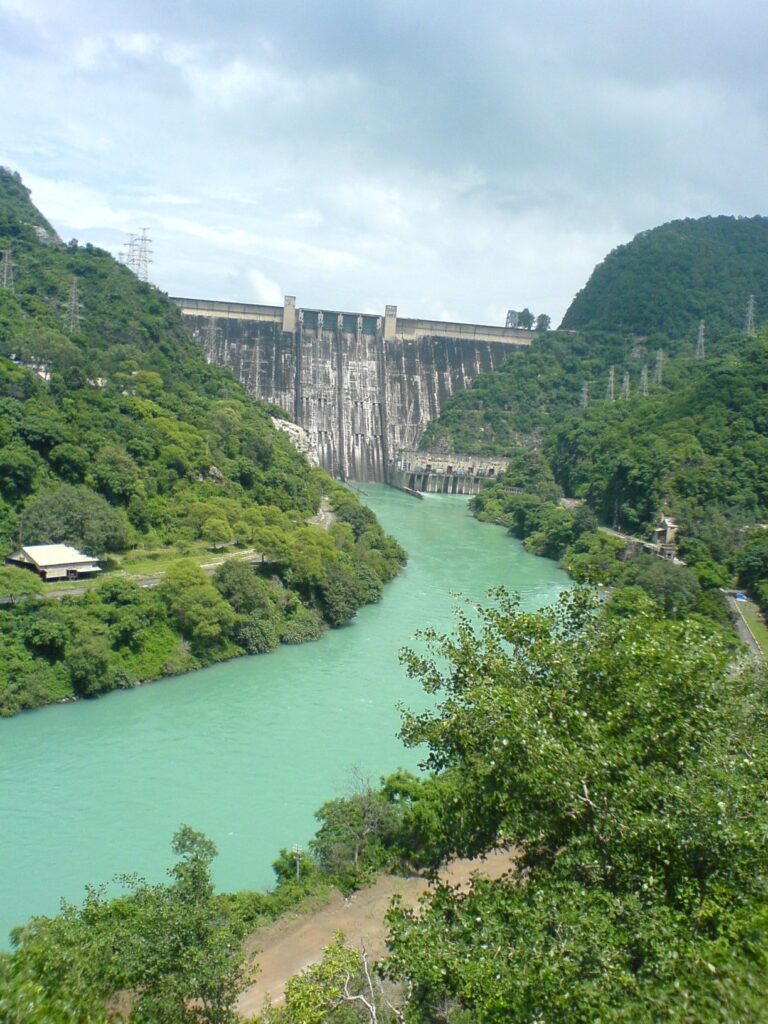
Featured image: An archival photograph of Bhakra Nangal Dam taken in 2008 by Kawal Singh, released into the public domain and sourced from Wikimedia Commons. It is not a photograph of the court hearing.
