
Chandigarh, November 17, 2026: Building owners, institutions and businesses in Chandigarh face updated fire-safety requirements after the UT Administration notified the Chandigarh Fire and Emergency Services Rules, 2026. The rules took effect on November 16, replacing the 1991 framework, although provisions governing licensed agencies under Rules 12–15 take effect 90 days after Gazette publication.
What changes under Chandigarh’s new fire safety rules?
The biggest change is a stronger emphasis on keeping fire-protection systems operational throughout the life of a building, rather than treating certification as a one-time formality. Covered owners and occupiers must arrange an annual inspection by a licensed agency and submit a Form F compliance certificate to the fire officer every July. This annual inspection is not a substitute for a Fire Safety Certificate (FSC) or its renewal.
Which systems must be checked annually?
Inspections cover detection and alarm systems, hydrants, sprinklers, fire pumps, water storage, extinguishers, emergency lighting, exit signs, smoke-control arrangements and fire lifts where applicable. Inspectors also assess staircases, exits, evacuation routes, refuge areas and emergency preparedness. Deficiencies must be documented and corrective action recommended. Owners should retain inspection records and confirm whether their building falls within the relevant statutory categories.
Which buildings need a fire safety officer?
The notified framework includes residential buildings at least 30 metres tall; hotels at least 15 metres tall and all five-star hotels; educational buildings at least 24 metres tall or institutions enrolling over 3,000 students; institutional buildings at least 15 metres tall or with over 100 beds; and business or mercantile buildings at least 30 metres tall. Certain large industrial, storage, hazardous and assembly buildings are also covered. The chief fire officer or authorised officer can issue a notice requiring an appointment within a month. The precise classification of a property should be checked against the notified rules rather than inferred from a general building label.
Five-year fire safety certificate and online renewals
Under the new rules, FSCs are to be processed through a designated online portal and are valid for five years, subject to applicable conditions. Renewal applications must be filed at least three months before expiry. Existing certificates continue for their original validity period unless lawfully cancelled or otherwise dealt with. The reported standard fee is ₹25 per square metre of covered area or ₹12,500, whichever is higher; industrial and storage premises are reported at ₹22 per square metre, subject to the minimum. Exemptions and the applicable fee schedule should be confirmed for each building.
What hotels, schools, hospitals and event organisers should do
Facility managers should check whether their premises require an FSC, identify the certificate’s expiry date, schedule maintenance and document emergency drills. Hotels, hospitals, large schools and commercial complexes should review whether a designated fire safety officer is required. Temporary pandals accommodating more than 50 people or covering more than 50 square metres are reported to require a Form A declaration displayed at the entrance. Event organisers should also verify the applicable fire-tender deployment charges.
What remains to be clarified?
Rules 12–15 governing licensing of inspection agencies begin 90 days after the November 16 Gazette publication. Owners should seek official guidance about the practical rollout of licensed-agency inspections and the designated online application portal. The rules concern Chandigarh UT; businesses in Mohali, Panchkula, Zirakpur, Kharar and Dera Bassi should follow their own jurisdiction’s requirements.
Official notification and reporting sources
The Chandigarh UT Digital Gazette lists notification 565768/FII(9)/2026/10019, Gazette 132 dated November 16, 2026. Details are independently reported by The Tribune (November 17) and The Times of India (November 17). The Chandigarh Administration’s earlier official release explains the enabling legislative framework. Readers should consult the Gazette and the Fire and Emergency Services Department for binding requirements.
For related local infrastructure developments, read our Chandigarh sewer rehabilitation update and recent Chandigarh public-safety orders explainer.
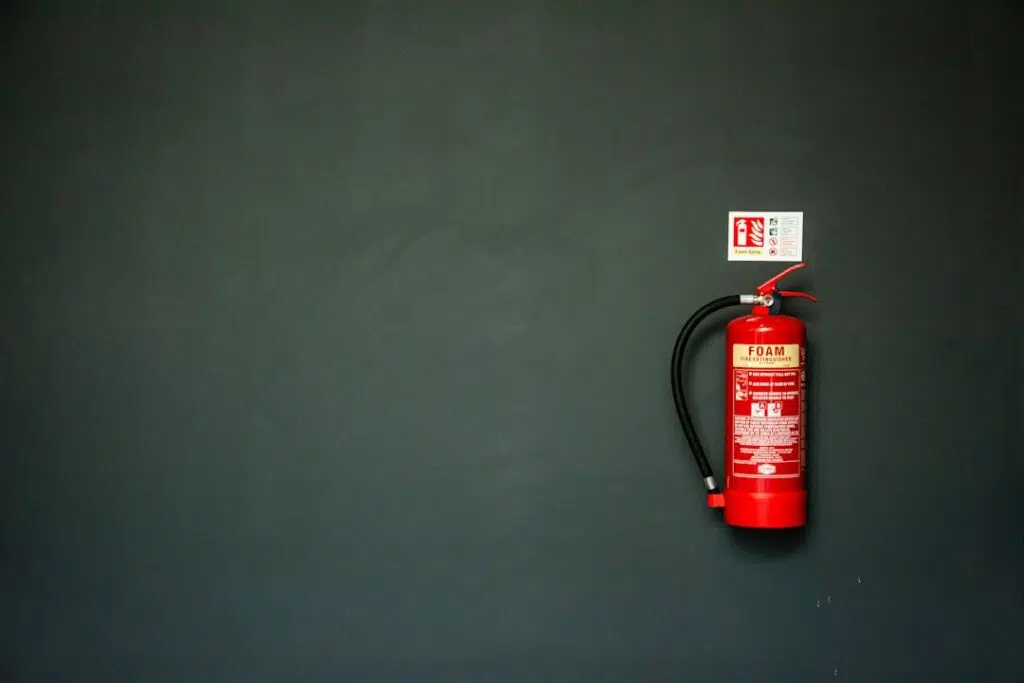
Featured image: Illustrative fire-extinguisher photograph by Tak Kei Wong / Unsplash; not a photograph of a Chandigarh inspection.