
Chandigarh, November 12, 2026: Chandigarh has finished second in the Swachh Shehar category for cities with populations between 3 lakh and 10 lakh at the Swachh Survekshan 2025–26 awards. President Droupadi Murmu presented the honour to Chandigarh Mayor Saurabh Joshi and Municipal Corporation Commissioner Amit Kumar at Vigyan Bhawan in New Delhi on November 11, according to a report by The Tribune.
The recognition puts the city among the leading performers in its specific population group. It should not be confused with an overall second-place ranking among every city in India, because the national awards use multiple categories and population bands.
What Chandigarh won at the national cleanliness awards
The award recognises Chandigarh’s performance in the 2025–26 edition of Swachh Survekshan, the nationwide urban cleanliness assessment under the Ministry of Housing and Urban Affairs. The Tribune reported that the ceremony was attended by Union Housing and Urban Affairs Minister Manohar Lal and Minister of State Tokhan Sahu.
Chandigarh had also placed second in the Super Swachh League category for cities with populations of 3 lakh to 10 lakh in the previous 2024–25 edition. Those are distinct categories, so the two results should not be presented as directly interchangeable annual ranks.
How the 2025–26 assessment worked
According to the published description of the latest survey, urban local bodies were assessed against 43 indicators across 10 areas. These included waste segregation at source, collection and transportation, solid-waste processing, visible cleanliness, access to sanitation, used-water management, sanitation-worker welfare, and public feedback and grievance handling.
The 10th edition placed added emphasis on residents’ feedback, the condition of water bodies and public spaces, sanitation at tourist and heritage locations, and measures to prevent open defecation and urination. The nationwide exercise covered more than 4,751 cities, according to The Tribune’s report.
Why the result matters for residents
Cleanliness awards offer a useful snapshot of municipal performance, but they are not a substitute for evaluating the daily condition of individual streets, markets, public toilets and residential colonies. For Chandigarh residents, the important questions remain whether waste is collected reliably, separated waste is handled correctly, sanitation complaints are resolved and public facilities stay clean throughout the year.
The city’s municipal corporation has also introduced a ward-level cleanliness competition designed to bring evaluation closer to neighbourhoods. The September announcement reported by Hindustan Times described a 1,000-mark framework with 55 parameters and development grants for leading wards. That separate initiative should not be mistaken for the national Swachh Survekshan award.
Cleanliness ranking is different from air-quality ranking
The November award concerns sanitation and urban cleanliness. It is separate from Swachh Vayu Survekshan, which evaluates air-pollution control measures. Chandigarh was reported to have ranked seventh in the latter survey in September 2026. The distinction matters especially after the city’s Diwali air-quality readings, which showed that short-term pollution episodes can still occur despite broader civic recognition.
What remains to be verified
The November 11 award and Chandigarh’s category placement are reported by The Tribune. The full city-level scorecard, exact marks and category-wide ranking table were not independently retrieved for this report. No claim is made here about Chandigarh’s overall rank across all population groups or about the resolution of every sanitation problem.
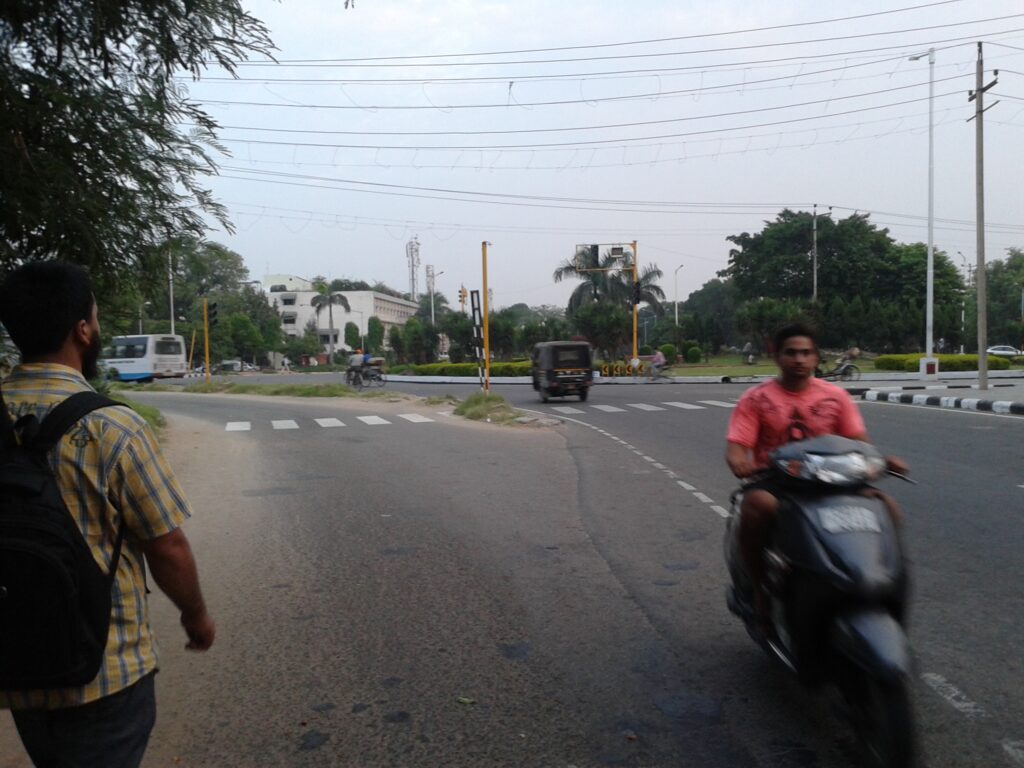
Featured image: Archival view of Chandigarh’s Sector 17 public space, used for illustration only. It does not show the November 11 award ceremony.